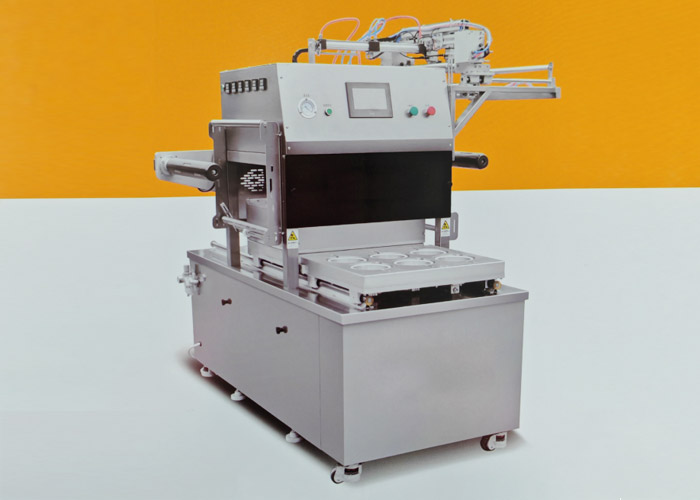
Usually, a metal detector consists of two parts, namely a metal detector and an automatic removal device, with the detector as the core part. There are three sets of coils distributed inside the detector, namely the central transmitting coil and two equivalent receiving coils.
Product Introduction:
Usually, a metal detector consists of two parts, namely a metal detector and an automatic removal device, with the detector as the core part. There are three sets of coils distributed inside the detector, namely the central transmitting coil and two equivalent receiving coils. The high-frequency variable magnetic field is generated by the oscillator connected to the transmitting coil in the middle. In the idle state, the induced voltages of the two receiving coils cancel each other out before the magnetic field is disturbed, reaching a balanced state.
Working principle:
The metal detector adopts an assembled differential transformer type sensor, and adopts metal detection technology - digital phase shifting and related detection technology in the circuit design. It has reliability, high detection sensitivity, strong material control characteristics, and excellent anti-interference ability. This product is mainly used in industries such as thermal power generation, cement, building materials, papermaking, mining, food, and chemical engineering to detect various metal substances mixed in raw materials. It uses the induction signal generated when metal enters the electromagnetic field of the sensor to drive the actuator through signal amplification processing circuit, thereby detecting harmful metals.
Main features:
① Quantification of sensitivity debugging;
② High sensitivity design can detect ultra large metals; Sound and light alarm;
③ Detection range: metals such as iron, aluminum, stainless steel, alloys, etc;
④ Control output: one pair of relay contacts are normally open, and the other pair are normally closed;
⑤ Timer function: Delay release after the relay is closed, with a delay time of 1-10 seconds.